01-01
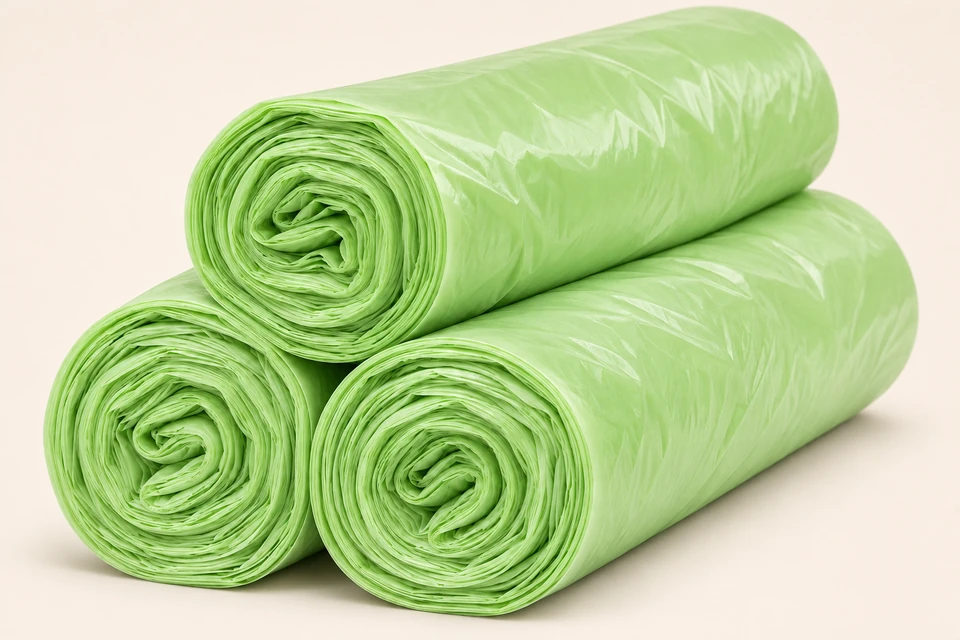
Roll liner
- Dimensions
- 42.93 × 44.96 cm
- Thickness (μm)
- 18
- Bags per roll
- 25
- Bags per carton
- 500
- Catalogue material
- PBAT + PLA + corn starch
For brands, distributors and food waste collection projects
A useful liner starts with the collection system, the caddy and the way the bag is handled. Compare Reroot Bio catalogue references, record the conditions that matter to your project, and send a brief that can be checked against the proposed finished bag.
Name the operator or programme and keep its accepted-liner instructions with your project. A general material description does not replace those requirements.
Check collection requirementsMeasure the opening and inside depth. Include room to fold over the rim and close the filled bag. Keep a photo of the current liner in the caddy.
Open the measuring guideDescribe moisture, replacement frequency and the planned packing count. These details make samples and quotations easier to compare.
Plan quantitiesStart with a reference, then discuss the specification your project needs. The figures below are catalogue data; approved order details belong in the quotation and product specification.
01-01
06-01
11-01
Two caddies with the same stated volume can have different openings and depths. Record the actual dimensions and watch how the liner sits at the bottom, folds over the rim and clears the lid. Use the same caddy when comparing samples, so each change has an understandable result.
Measure My Caddy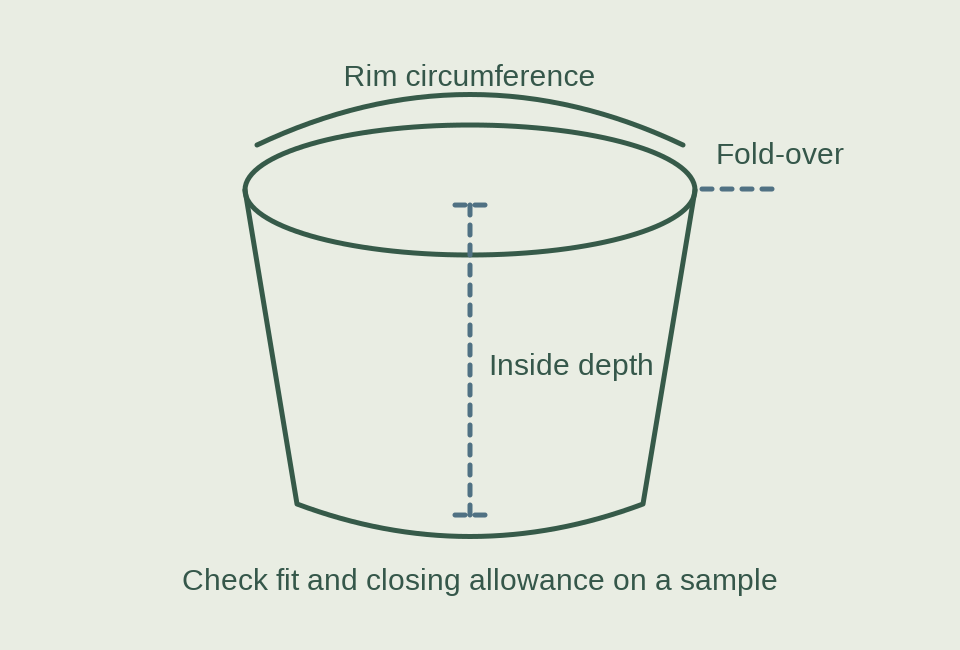
Enter collection points, liner changes and operating days. The planner shows an estimate in bags, rolls and cartons for the reference you select. Keep this separate from bin fit and the catalogue minimum order reference.
Use your own replacement schedule. Compare packaging after choosing a catalogue reference.
Check caddy fit separately in your actual bin.
Send This Planning ResultA useful trial records the caddy, contents, moisture, filled weight, waiting time and removal method. Agree the observation criteria before comparing samples. Send the results with the reference number so the next discussion addresses the actual problem.
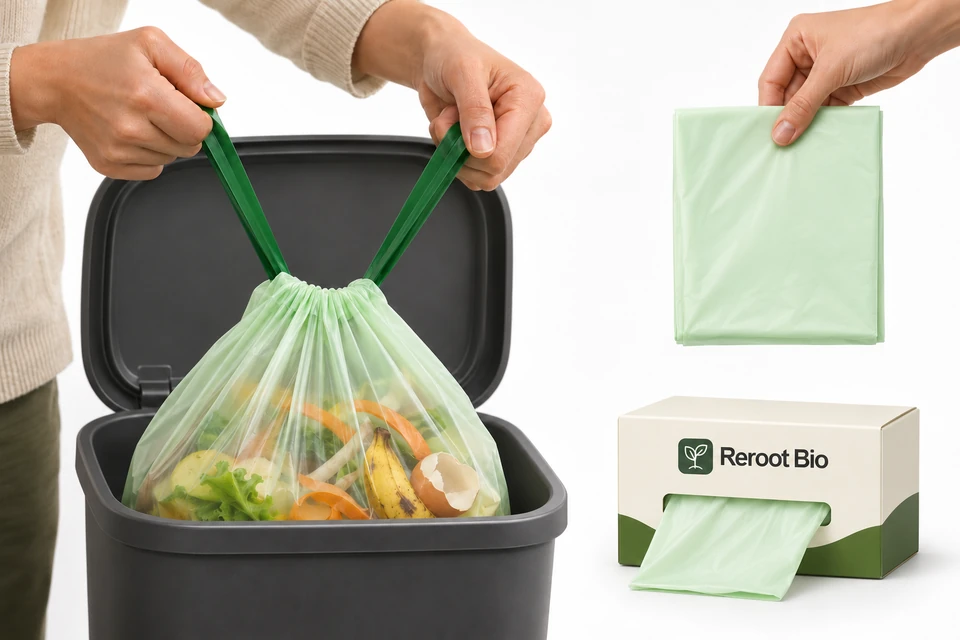
Specify the bag count, artwork and intended market along with your chosen format. Keep disposal wording tied to the product evidence and the receiving programme. A clear size and packing statement helps the next person choose the bag and order it again.
Build a Private Label BriefCheck depth, fold-over and lid contact one at a time before selecting another food waste liner size.
Use actual bags per roll and rolls per carton to compare liner orders on the same quantity basis.
Record your operator’s liner requirements and match them to the proposed finished bag before ordering or printing disposal claims.
Measure the opening, usable inside depth and required fold-over. Capacity alone does not establish the flat bag dimensions or how the liner will sit in the caddy. Check the proposed sample in the actual bin.
Check the receiving programme’s own liner requirements. Product evidence and local acceptance are separate parts of the decision; keep both with your purchasing brief.
Start by comparing your measurements with the smaller catalogue formats, including 01-01, 06-01 and 11-01. These are discussion starting points, not universal fits for a named litre capacity.
Describe the contents, moisture, filled weight and holding time you intend to use. Assess the sample under agreed conditions; dimensions and thickness alone do not establish leak performance.
The published MOQ references are in individual bags. Final quantity and packing depend on the selected specification and quotation; they are not a statement of stock availability.
Include the programme name, accepted-liner instructions, bin measurements, quantity and distribution method. Add any product-document requirements supplied by the operator.
The source catalogue describes these references as PBAT + PLA + corn starch. Request the proposed specification and relevant documents for the exact finished bag rather than inferring a composition percentage.
Catalogue reference 11-01 lists 400 × 500 mm, 30 μm and 20 bags per roll. Review the closure details and carton packing for the proposed order.
Send the artwork, printing requirements and intended market. Disposal statements and any marks must match the product documents and the use or collection conditions being claimed.
It calculates from the assumptions you enter. Record actual consumption and update the inputs; the website does not predict waste generation or staff behaviour.
Sample availability, cost and shipping are discussed for the request. Tell us which reference you want and what the trial needs to establish.
Keep the caddy, loading routine and observation criteria consistent. Record the sample reference and change one fitting detail at a time where practical, so the result is understandable.
A photo and a few measurements are enough to start. Add your target market and expected order quantity, and tell us what you need the sample or document review to answer.