How to Run a Wet Food Waste Bag Trial
Run a comparable wet food waste liner trial. Record the contents, filled weight, holding time, leak location and removal for each sample.
Use a sample record to compare liner fit, wet waste handling, separation and closure in the routine your team actually uses. Agree the observation criteria and the sample identification before you begin.
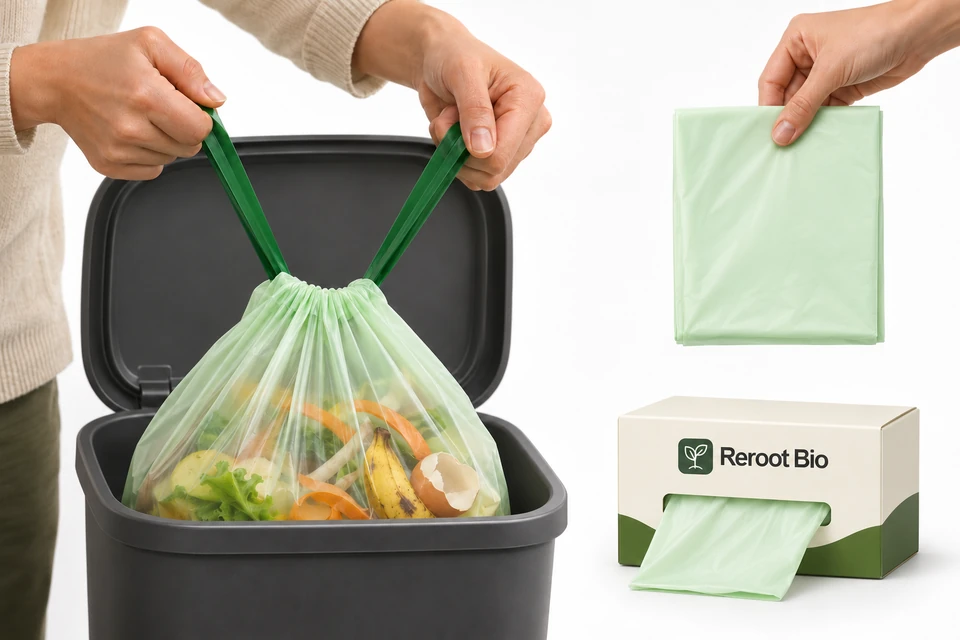
Fit the liner in the actual caddy in the usual way. Record the opening and usable depth, fold-over, lid movement and where the cuff first slips or catches. A clean dry item helps show whether the bag reaches the base. Photograph the rim and the bottom with the sample reference visible.
Measure the Actual CaddyUse the usual type of scraps and record the moisture description, expected and actual fill, holding time, and how the liner is lifted and closed. Write down what happens during fitting, holding and removal. Mark any change to the trial conditions and record the actual weight with its unit.
Assess wet use in a separate observation after the dry fit check. Agree any pass criteria in advance with the project team and supplier. Keep the caddy, contents and handling steps consistent across the samples you compare.
Use one record per sample and caddy. Record the sample ID, product reference, caddy ID, opening, depth and fold-over method, first position of movement, contents, moisture, filled weight, holding period, removal, closure, photographs and the proposed corrective action.
Keep the observations with the approved drawing, roll and carton packing, and any finished-bag information. Tell Reroot Bio whether the next sample needs a different size, closure or pack. Sample availability, cost and shipping are confirmed for each request.